City Pumps Brakes on Downtown Garage – Now It’s Time for Real Transportation Solutions

Key West officials have quietly paused plans for the controversial $6 million parking garage at Simonton and Angela Streets. According to the Key West Weekly (Feb 12 edition), City Manager Brian Barroso scrapped the proposal by February 6th in response to public opposition following a contentious January 27 workshop where neighbors raised concerns about flooding, cost, and the project’s impacts on downtown.
This is the right call. As we explored in our January series on the garage (here, here, and here), the City never demonstrated demand for the facility, never inventoried existing parking supply, and never explained how 85 new spaces fit into any broader transportation strategy. The project was, as we put it, “a solution in search of a problem.”
But here’s the more important question: Now what? In our story below we explore why downtown transportation matters, seven things that should happen instead, and the work ahead to get there.


Why Downtown Transportation Matters
This should be about more than a parking garage. It’s about something much bigger: How do we keep downtown Key West thriving as the walkable, bikeable, human-scaled place that makes our island special?
Our historic downtown core is the economic engine of Key West – the golden goose, if you will. It’s where locals gather, where tourists explore, where small businesses and cultural institutions flourish, and where the unique character of this island comes to life. Duval Street, the surrounding blocks and the Seaport aren’t just another commercial district. They’re what sets us apart from every car-choked, strip-mall-dominated place on the Florida mainland.

But that special quality is fragile. If we let downtown become dominated by cars – by traffic congestion, parking lots, and the endless hunt for spaces – we lose what makes it work. We become just another place where you drive from Point A to Point B, park in front of your destination, and leave. That’s the mainland model. That’s not Key West.
The real question isn’t “do we need more parking?” The real question is: “How do we make downtown function better while preserving the walkable, bikeable, transit-friendly character that is our competitive advantage?”
The good news? We already know how to do this. We just need to double down and commit to it.
Seven Things That Should Happen Next Instead
The City doesn’t need to start from scratch. Much of the groundwork is already in place – adopted plans, proven strategies, and ongoing initiatives that just need commitment and funding. Here’s the path forward:
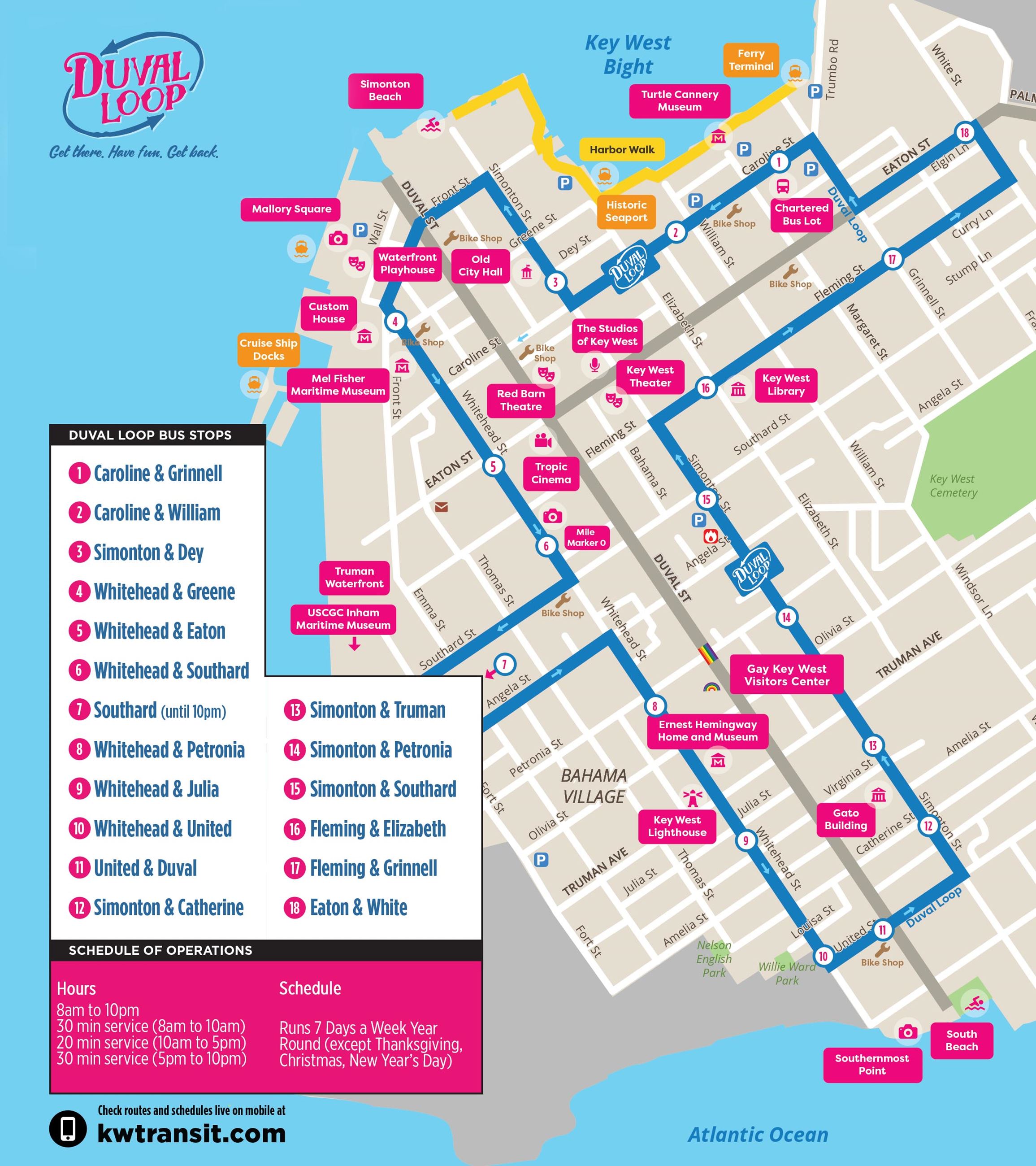
1. Fund the Duval Loop From Tourist Tax Dollars
The suspended Duval Loop was exactly the kind of service downtown needs: frequent, free, and designed for tourists. And beloved by downtown workers and residents too. As we documented last summer and fall (here), the Loop’s elimination was a tragedy that hurt both visitors and the businesses that serve them. Commissioner Monica Haskell has been leading the charge to secure Tourist Development Tax funding for tourist-serving transit like the Loop, and Commissioner Sam Kaufman has been equally vocal about the need to act quickly.
This is the most immediate, high-impact move the City can make. Using TDT funds for transit doesn’t raise local taxes, serves the visitors who pay those taxes, and reduces the very congestion and parking pressure the garage was supposedly meant to address. The City and County need to finalize this funding for the next fiscal year budget cycle, which begins in October.
2. Boost Transit for Workers and Residents
But the Duval Loop alone isn’t enough. Workers commuting from up the Keys and residents throughout the island need reliable, frequent transit options. That means:
- Lower Keys Shuttle: Increase frequency from the current 90-120 minutes down to 60 minutes or even better every 30 minutes. With adequate funding – potentially from TDT for the tourist-serving portions – this becomes a viable option for workers and visitors alike.
- Workforce Express: Expand the service connecting Stock Island workforce housing to downtown with more frequent and simplified runs and extended hours to match actual shift times.
- Key West Rides on demand and new fixed routes: Provide more capacity for Key West Rides and implement new fixed route services called for in the 10-year plan.
The goal is simple: make taking the bus faster, easier, and more reliable than hunting for parking. That’s how you actually reduce downtown congestion.


3. Manage Existing Parking Better
As we’ve written extensively (here), downtown already has more than 10,000 parking spaces. The problem isn’t supply – it’s management. There are still 1,000-2,000 unmarked, free on-street spaces spread throughout Old Town that encourage “hunting for parking” and create the illusion of scarcity.
The solution:
- Eliminate or time-limit free on-street parking in the commercial core (more here)
- Improve wayfinding so visitors know where the garages and lots actually are (here and here)
- Right-price parking to match demand and encourage turnover (here)
- Better promote and coordinate the existing City and private lots and garages
Do this and you’ll reduce the circling, the congestion, and the frustration – without building a single new space.


4. Invest in Bike and Pedestrian Infrastructure
Key West ranks #1 in Florida for bikeability and in the top 50 in North America, according to PeopleforBikes (here). But we can do better. The adopted Bike/Ped Master Plan (here) calls for safer infrastructure, and recent projects like the new bike lanes on United and South Streets show progress. The new Safety Action Plan (story here and plan here) will show us the projects and policies that will have the most immediate impacts. Keep that momentum going.
More specifically:
- Continue building out protected bike lanes and the Crosstown Greenway
- Install more bike parking downtown (there’s even an app for suggesting locations)
- Create parklets and wider sidewalks on key commercial blocks by removing a few parking spaces where it makes sense – we’ve written about this before (here)
- Enforce e-bike and e-scooter regulations on promenades to keep pedestrians safe (here)
Making it safer and easier to bike doesn’t just help residents – it gives tourists a fun, memorable way to explore the island.


5. Market Car-Free Options to Visitors
Here’s the reality: roughly 1.37 million visitors arrive in Key West by car each year. They’re already here. The question is: do we make it easy for them to park once and explore on foot, by bike, or by transit? (here) Or do we encourage them to drive everywhere, hunting for parking and adding to congestion?
As we explored in our two-part series on making Key West car-free for visitors (here), the solution is marketing and infrastructure working together, because research (here) tells us that people who have a car, will use that car to get around, unless there’s easy alternatives:
- Promote transit, bike rentals, and walkability in TDC materials
- Partner with hotels to provide guests with transit passes and bike access
- Create clear wayfinding from parking areas to downtown attractions
- Brand the experience: “Park once, explore Key West the easy way”
This isn’t anti-car. It’s pro-choice. Give people options and many will choose the easier, more enjoyable path.
6. Create a Comprehensive Downtown Transportation Plan
Only after doing the above – or at least committing to it – should the City revisit the question of whether any additional structured parking is needed. And if that conversation happens, it needs to be grounded in actual data:
- A complete inventory of all parking (public, private, on-street, off-street)
- A demand study showing actual utilization patterns and future needs
- An analysis of alternative locations like the Stock Island Intermodal Center (here), which could intercept cars before they reach downtown
- A transportation plan that integrates parking, transit, biking, and walking into a coherent strategy
This is what the January workshop lacked. This is why the garage proposal failed. Don’t repeat that mistake.
7. Recommit to the Duval Street Resiliency Project
At the parking garage workshop, City Manager Barroso twice mentioned the need for funding to start the Duval Street Resiliency and Revitalization Project – work that would improve Duval Street and the surrounding neighborhood’s resilience against sea level rise and flooding. Much of this work will be underground infrastructure, but it presents a golden opportunity: while we’re tearing up the street anyway, let’s reimagine what’s on top to make it more walkable, bikeable, and people-friendly.
This project has been in the works for years (here). It’s time to stop talking and start building.

The Work Ahead
Pausing the garage was the easy part. Now comes the harder work: actually building the transportation system downtown deserves.
The good news is we’re not starting from zero. The City has adopted plans. Commissioners like Haskell and Kaufman are pushing for solutions. The TDC has the resources. Business leaders like Paul Menta have been vocal about the need for better transit. The pieces are there – they just need to be assembled and funded.
This isn’t about being anti-car or anti-development. It’s about being pro-Key West. It’s about recognizing that our downtown’s walkable, bikeable character isn’t a luxury or a nice-to-have – it’s our competitive advantage. It’s what draws people here. It’s what keeps local businesses thriving. It’s what makes this island worth protecting.
The mainland has plenty of car-dominated commercial strips. Key West has something different, something special. Let’s keep it that way.
# # #

Chris Hamilton is the founder of Friends of Car-Free Key West & Duval Street/Historic Downtown, a local advocacy group championing sustainable mobility and vibrant public spaces. Subscribe to the blog and follow on Facebook, Twitter, and Substack for updates. All stories are cross posted at KONK Life News. Originally from Washington, D.C., Chris spent over two decades leading nationally acclaimed initiatives in transit, biking, walking, and smart growth for Arlington County, VA’s DOT. Since moving to Key West in 2015, he has embraced a car-free lifestyle downtown, dedicating his time to non-profits and community projects. Explore all Streets for People column articles here.